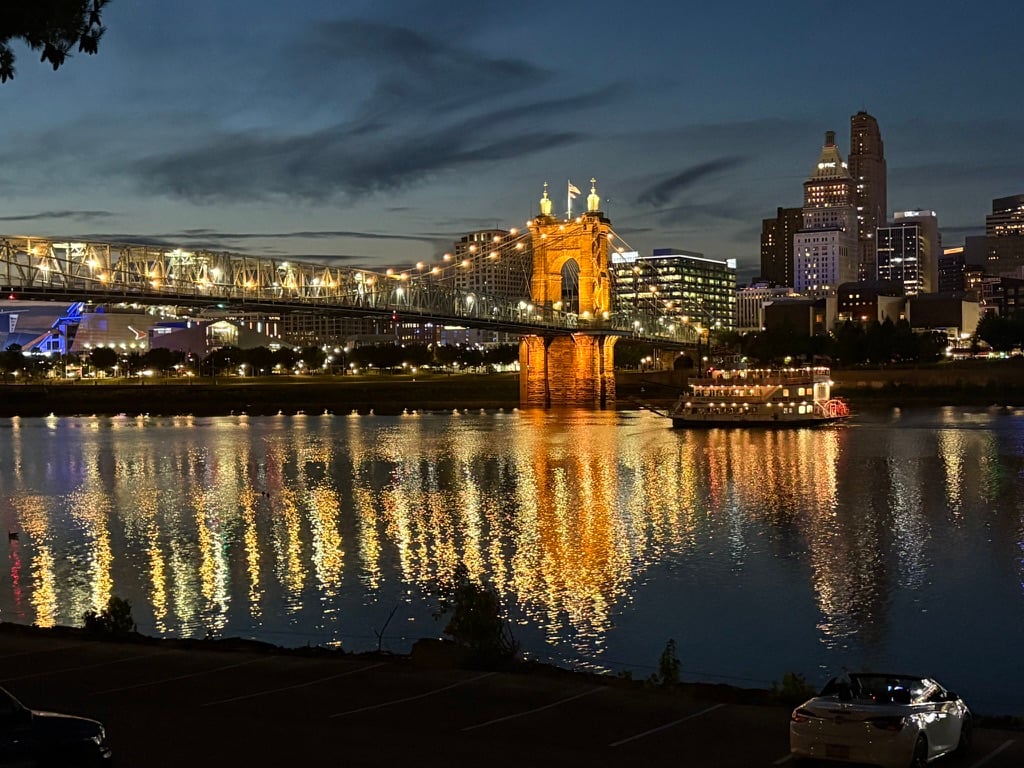
Roebling Suspension Bridge Cincinnati

One afternoon in 2020, Derek Krissoff, then director of West Virginia University Press, tossed an idea onto Twitter:

Weird to me that there isn’t (unless there is) a smart general-interest book about the Ohio River combining history, geography, and maybe a little Frazier-esque travel. I would publish that book.

I knew I was the person to do it. I grew up north of the river in Licking County. Throughout my 1970s childhood, Mom took me and my siblings to visit relatives who lived in towns along the Ohio River.

I delighted in the company of my great-grandmother and great-aunts. They told rollicking stories about living in Eastern Kentucky coalfields during the Great Depression, my great-grandfather’s brave fight for union representation in the coal mines, and the fast and loose morals of Sunday morning preachers of hellfire and brimstone who spent the rest of the week brewing ‘shine.

As newlyweds during WWII, my grandparents seized the opportunity to take the “Hillbilly Highway” north to industrial centers along the Ohio River and in Michigan. There, they worked with their backs and hands for union wages as they helped supply the war machine and enjoyed the luxury of indoor plumbing.

I came to realize the importance of the Ohio River in their stories; how it had formed a border between impoverishment and opportunity, and how living on the north side of it had shaped my worldview very differently from that of my Kentucky cousins, who embraced the fiction that Kentucky enslavers practiced a more humane form of human bondage than those in the Deep South.

Until I started researching this book, our competing worldviews of American history seemed more a family quirk than the product of how a free state and former slave state taught us their histories.

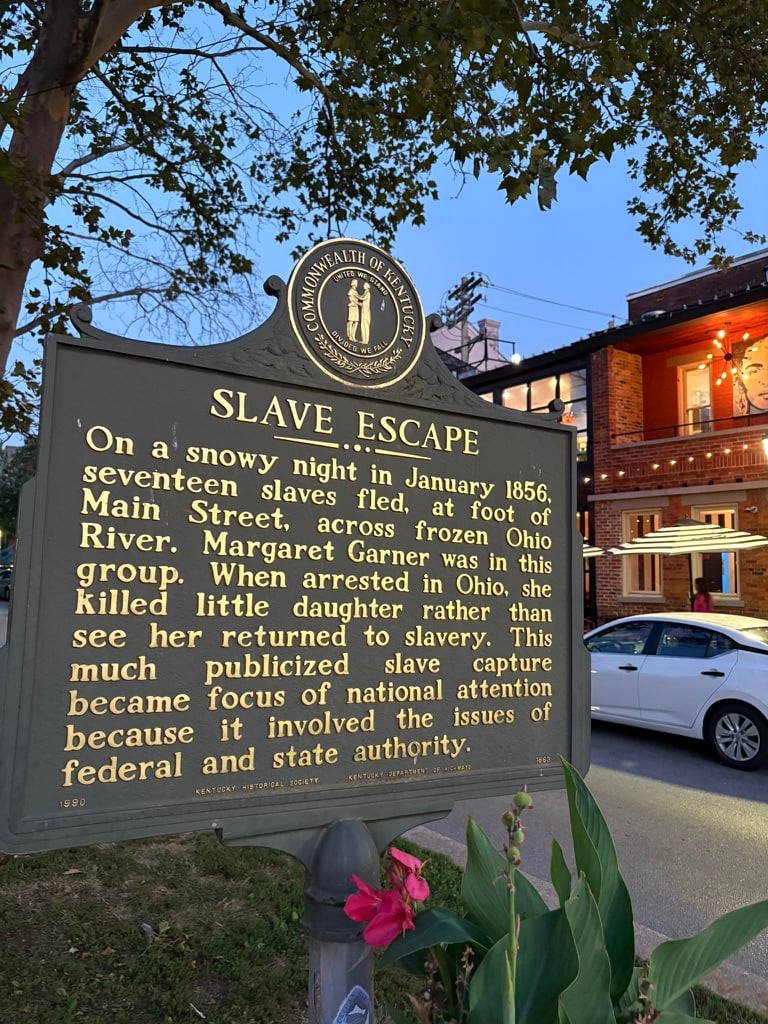
Margaret Garner historical marker

My state-sanctioned history books must have covered the Northwest Ordinance of 1787, which was supposed to keep slavery out of the Northwest Territory and the states it became. But in my defense, what ten- or fifteen-year-old remembers the details of an old Ordinance after the quiz? Much less, what that old Ordinance would mean in 2026.

The Ohio River was the country’s longest slavery border and, importantly, one you didn’t have to be a surveyor to see with your own eyes. Growing up in Ohio about 100 miles from the river, I never understood how that river border forced people to make decisions, compromises, and mistakes until I started accumulating their stories.

Six years after Derek’s tweet, I’ve traveled all 981 miles of the Ohio River, from its headwaters in Pittsburgh to its mouth at the Mississippi in Illinois. My newsletter, The 981 Project, is where I’ve been test-driving some topics and learning from readers.

I’ve submitted about 200 pages to my editor, which include 350+ footnotes. Oh, the footnotes.

I have another 100 pages to write about the river’s role in American history, culture, geography and my life and then it will go into the publication process with University of Illinois Press’s 3 Fields imprint. At this point, I think it will be in print late 2027 or early 2028. 
Buckskin in the slow lane

Buckskin Rides Again, my motorcycle travel memoir, is making its way through the publishing world’s glacial pace. Stay tuned.

A collective gasp in Winston-Salem

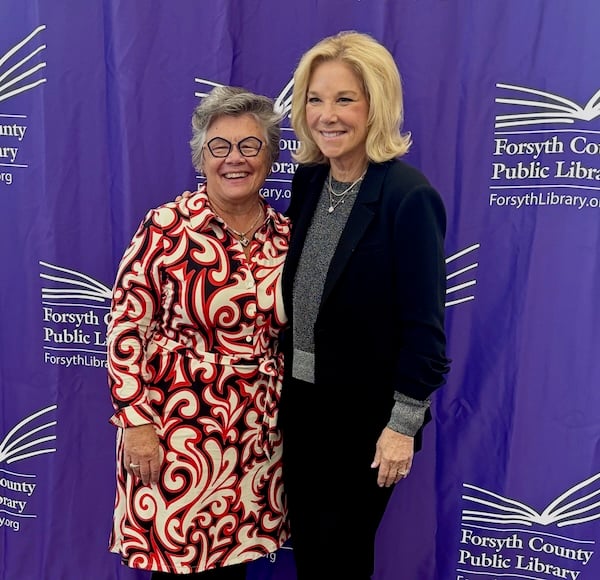
Finally, Joan Lunden and I were together in Winston-Salem, North Carolina to talk to a lively audience about working together on her memoir, Joan: Life Beyond the Script. 

I enjoyed guiding the conversation into the less-familiar areas of her life for the audience, including the time when she hosted a Good Morning America segment on smoking during pregnancy. The crowd gave a collective gasp as she described watching the ultrasound on live TV while a pregnant woman lit a cigarette. On the screen, the fetus began to twist and fidget. Anyone would gasp to hear or read that story, but it carried special import in a town carrying the brand names of two cigarettes.


Tamela Rich, Joan Lunden at Forsyth County library