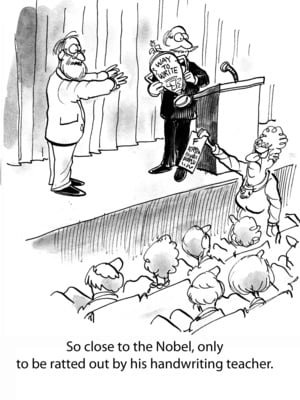
Resolved to Write a Book?
Within the last week of 2011 over four million Android devices were activated. What does this mean to the business professional who has been waiting to write a book? You’d better get with it.
Every day over 500k devices are activated that people could be using to read your message–or someone else’s. Yes, even Apple users can read what you’ve written if you publish it on the Google eBookstore (which means there is no need to wrestle with publishing to the iBookstore).
Like snowflakes to an avalanche
If you’ve made resolution to write a book this year but haven’t written so much as a blog post or newsletter, start with one of those projects. If you’ve been blogging or writing articles, white papers or newsletters for a couple of years, you’ve got a running start at a 15,000-word book. Here’s how quickly your smaller projects could add up:
- Do you read newspaper opinion columns? They average 700 words, so if you’ve written 22 pieces of that length, you could compile them into a book.
- Most blog posts average 300+ words, so 50 posts would total 15,000 words. Count the average words in your blog posts and do the math.
- How many speeches or presentations have you delivered? Those add up, too. If standard speech without long pauses runs 150 – 170 words per minute, a 20-minute speech is 3,000 to 3,400 words. If you’ve delivered five 20-minute speeches on your subject, you’re ready to roll.
If you think you’re ready to begin or want to talk about how to begin writing a book, contact me. Our first consultation is on the house.
Self-Publishing: Everyone Needs An Editor
Ask any professional writer about the need for a fresh set of eyes and they’ll tell you it’s essential. I don’t have an editor for my blog posts and newsletters, but when I write long form, whether a white paper, article or book, I always collaborate with one.
When putting together my team for Live Full Throttle I knew I’d use Aprill Jones (@aprillwrites on Twitter). Aprill writes copy and is as an account social media content manager with an area advertising agency, in addition to being a freelance copywriter and editor. We’ve hired each other to edit client’s book projects.
Editor as Reader Advocate
There are different kinds of editing assignments. One is a “conceptual” editor and another is “copy” editor. The conceptual editor is akin to an architect and a copy editor to a home inspector. The conceptual editor guides the writer in how to present the material for maximum impact, while the copy editor makes sure the final output doesn’t distract the reader with inconsistencies, punctuation, grammar and other details of craftsmanship. Some projects call for another layer of edits between conceptual and copy, because familiarity with the work dulls the senses (and that familiarity begins with the writer). Editors are the readers’ advocates for the project.
For Live Full Throttle, I asked Aprill to focus somewhere between conceptual and copy edits on the first round. I originally wrote:
In 2005 Karen was diagnosed with Choroidal Melanoma, a form of eye cancer. Five years later, in a three-month period, her position with an Episcopal parish was terminated, her husband left her, and she was literally run over by a Mack truck while riding her motorcycle out of state.
She described cancer was “a skate” compared to the triple-whack.
What’s a laid off minister facing divorce do with a paid sabbatical? Take a motorcycle trip on a Suzuki Boulevard, of course. But what began as a wind-in-the-face opportunity to assess life and career options ended in an orthopedic exoskeleton from neck to waist.
After Aprill’s feedback it became:
In 2005 Karen was diagnosed with Choroidal Melanoma, a form of eye cancer, which she described as “a skate” compared to what came five years later. In a three-month period during 2010, her position with an Episcopal parish was terminated and her husband left her.
So what’s a laid-off minister facing divorce do with a paid sabbatical between employment and unemployment? Take a motorcycle trip on her Suzuki Boulevard, of course.But what began as a wind-in-the-face opportunity to assess life and career options ended in an orthopedic exoskeleton from neck to midsection when Karen was literally run over by a Mack truck several states from home.
Advice for self-publishers
If you are a business professional planning to use a book as a door opener for speaking engagements or as a leave-behind with clients, remember that old saw about judging a book by its cover: people will judge YOU by your book. Your book should be at least as professionally designed, written and edited as it would have been in the hands of an experienced publisher.
No matter how well you write, you need an editor or two. Non-fiction writers, I’m not telling you to hire the local high school’s British Literature teacher as an editor, I’m advising you to hire someone who will read your work on behalf of your intended audience. Works of high literary fiction read very differently than self-help and inspirational books, which is how Live Full Throttle is categorized. The white papers, newsletters and books I write for financial professionals are different from both Brit Lit, too. Command of the language and its conventions is just the starting point when looking for an editor.
I wrote a post last year about how to find the right ghost writer for your project. Some of that applies to finding the right editor:
Before you hire someone to write for you, be sure they have domain expertise. My specialty is business writing and nonfiction because I have the background and education to do the job well. If someone asked me to write for pharma or hi tech I’d have to take a pass — actually I’d have to question why they called me in the first place!
The right relationship starts with due diligence, including work samples and client referrals.
For self-publishers hiring book design firms, ask if the firm can refer editors they’ve worked with in the past. Some firms even have copy editors on staff.
When I ghost write, I also function as conceptual editor, but I wouldn’t take on a copy editing job. If you’d like to work with Aprill and me on a project, send me an email.
Want a Book Publisher? Start with a Book Proposal
If you’re writing a non-fiction book and you’re NOT interested in publishing it yourself, you need to write a book proposal, not a book.
Why is this? Unless a publisher approaches you about writing a book,they must first be convinced that a market for the book exists. Then they’ll need to be convinced that you’ve got the right plan for selling your book to that market. If they’re convinced on these two fronts then — and only then — will they read your sample chapters.
You may have to approach publishers through an agent, not directly. Agents will read your book proposal before approaching publishers. If it’s a good one, they’ll help you massage the proposal and your sample chapters to meet the various publishers’ criteria. But you’ve got to write the proposal first (or hire someone to do that for you).
I’ve written before about the need to approach a book project with specific goals. Writing a book proposal will guide you through turning the goals into tactical steps.
See how comfortable you are with these questions and then get in touch if you’re ready to explore how we might work together.
These marketing issues (and others) must be addressed in your book proposal
- Name three books that are on the shelves right now (and selling) that would interest the same people who would buy yours. Contrary to what you might think, “competition” demonstrates that a market exists.
- How is your book the same as each of the three?
- How is it different from each?
- Comparing your education, work history, achievements, awards, publications and professional affiliations to those of the other authors, how do you stack up?
- If you walked into a book store looking for your book, in what ONE area would they find it? Business? Finance? Management? Personal investing? Memoir? Electronics? Computer programming? This helps you focus — you’ll sell more books when you focus than when you shotgun.
- What five questions does your ideal reader want to see answered in your book? This assumes you know who your ideal reader is, of course.
- Make a list of everone you can count on to read your book and publicly rave about it.
- Where they will be raving?
- How many followers/subscribers will be paying attention to their raves?
- How many clubs, professional organizations and affinity groups will pay you to speak at a meeting and allow you to sell your book there?
- List them.
- What exact dates and cities will they hold meetings during the first year your book is available?
What about you, the author?
If you plan to write a memoir or autobiography, what about your life has universal appeal?
What can people learn from your experience even if their lives have little in common with yours?

Would a co-author’s credentials help you sell more books?
I recommend reading Guerrilla Marketing for Writers, whether you intend to write your own book, to publish your own book or to use a ghost writer or publisher. Great stuff.
Hopefully you answered these questions with confidence. If so, let’s get started.
So, You Want to Write a Book
“Times are bad. Children no longer obey their parents, and everyone is writing a book.” ~ Marcus Tullius Cicero
While more people are inquiring about my ghost writing services this year, it seems once aspiring authors come to grips with what’s involved with writing a book, they cower.
If you find that you want to write a book after answering the series of questions in this post, let’s get started. If you’re discouraged, better now than later.
What are your goals for the book?
You do have goals for the book, right?
Very few people want to write a book just to check it off a bucket list — that’s the poet’s purview. Most business people are motivated by fame, fortune or passion for a cause. These questions will help you determine whether a book will meet the goals you’ve set for it.
- How will you calculate the return on the investment of your effort? Your answer could be expressed in hard or soft dollars or social outcomes.
- Could you meet your goals by giving your book away? Or do you need a profit on your book? A good number of decisions hinge on your answer to this question, including whether self-publishing is preferred.
- Whose work is your audience reading today? What unique point of view do you offer?
- How many platforms can you distribute your content on? In other words, can you write it once and move it electronically, in print, through a recording, and perhaps video seminars? Some books, for example coffee-table books, just don’t translate well to audio or text-only readers.
What’s your magnetism?
One of my (young adult) sons is a Jersey Shore fan. Please don’t judge me. I bring that wretched TV show into the conversation simply to make a point — Sookie’s book sells because the show has fans. Truth be told, I didn’t know Jersey Shore fans read books — the one in my house doesn’t. But I digress.
The takeaway here is that A Shore Thing is an extension of the Jersey Shore franchise, not its cornerstone. If you want to sell your book quickly, you need a fan base, too. If you need to sell the book, not give it away, do you have at least 1000 people who would spend at least $5 for it? Would they spend $10? $20?
Too many people think that a book will bring them new fans/clients instantly. This is possible if your existing fans are sufficiently motivated by your message to evangelize others into buying your book. Otherwise you should count on paying — in some combination of time, effort and dollars — to promote your book. And there’s nothing wrong with that.
Two of the best resources I’ve come across to help you figure the book business out is Guerrilla Marketing for Authors: 100 Weapons to Help You Sell Your Work and Dan Poytner’s Self-Publishing Manual. I suggest reading them before you begin writing your book, even if you intend to place your book with a publisher.
Bottom line: If you have a passion for your subject, you have clients/fans who are passionate about you or your message, and you’re willing to immerse yourself in the book project for a couple of years (writing and promoting it) a book might provide you with personal and professional satisfaction. You might change lives and make the world a better place. You won’t know until you try.
If you’d like to talk about your project, reach out. Our first conversation is free.
Three Things Business Authors Should Learn From Celebrity Autobiographies
Last night my friend Crystal Dempsey invited me and several other Charlotte women to the local premier of Celebrity Autobiographies. If this show comes to your town, definitely go to see professional actors read verbatim from books that were most certainly ghostwritten.
Oh, and if you’re lucky they’ll also read Suzanne Somers’ poetry (which probably wasn’t ghosted).
Sitting in the Booth Playhouse I found myself squirming at times, wiping away tears at others and often feeling ashamed of the ghost writers who were behind the work being read. For a taste of the brilliance I included a video at the bottom of the page.
Ghost writer takeaways for would-be business authors
- Don’t add fluff. I don’t think I’ve ever read a celebrity autobiography, but if last night is indicative, they carry a surfeit of filler material, just like business books. If you don’t have enough information to fill a book, write an article or eBook. You can always roll the articles up into a book later.
- Don’t publish until it’s right. Some (most?) of the celebs whose books were featured last night surely had second thoughts before they signed off on the final copy. Surely? Yes, I’m sure Kenny Loggins had reservations when he wrote about his wish for day of passionate lovemaking sans birth control. Surely he did. I’m not advising business authors that they should delay publication until it’s the definitive work that the sands of time will never change — even history is re-interpreted. Instead I’m telling you to listen to that little voice that says “This needs more data,” or ” I’m not sure this part needs to be in this book,” or “I don’t think my point is clear.”
- Hire for writing ability AND technical expertise. Celebrity autobiography ghost writers don’t need to be celebrities, they just need to understand the roller coaster of life — children are often misunderstood, everyone starts out a virgin, and some people are sharks — and draw their subjects out along those lines. Hiring a business ghost writer is different. You don’t want to spend time as an author explaining to your ghost writer what an ETF is or who Michael Porter is or how the Fed’s money supply affects mortgage rates.
And here’s the promised clip.
[youtube]http://www.youtube.com/watch?v=joUn6XwY0Dk[/youtube]
Don’t Be So Punny
This Daily Show segment, while aimed at news shows, rings true for business communicators, too. If you rely on puns to make a point, you’ll lose your audience. Get real!
The Daily Show With Jon Stewart Mon – Thurs 11p / 10c You’re Not Punny www.thedailyshow.com
Have you ever had a pun backfire? Got a story to share? I’m compiling a Hall of Shame on this subject (with your help).
Is it a Slogan or a Key Message?
In the continuing discussion of key messages in your business writing, here’s a quick example of how a slogan can reflect underlying key messages.
It can be a chicken-egg exercise deciding whether to start with a slogan or key messages. I usually find it easier to start with the latter and distill them into a slogan.
The difference between key messages and slogans confuses some people. If you need help, please contact me.
Key Messages that Resonate
Here’s an example of how two bankruptcy law practices’ key messages reflect different business models. Key messages will resonate with certain audiences and be dissonant with others. Use the messages that resonate with YOUR audiences and don’t muddy the waters trying to be all things to everyone.
Decide which audience you want for your business and craft key messages that resonate with them. In another post I’ll differentiate between slogans and key messages.
What is resonance?
To resonate means “to be understood or receive a sympathetic response.” Here’s a video demonstration of resonance using salt on a plate that’s wired to an amplifier. As the sound waves change, the grains arrange themselves into different patterns that resonate with the sound waves. The grains find the sound wave irresistible, which is what your key messages should be for clients and prospects.
What constitutes buying differs from company to company, but whether it means picking up the phone, hitting the “subscribe” button or authorizing a purchase order, you need to produce media with the key messages that resonate with your audience’s ”buy now” instinct.
Examples of key messages
People always resonate with message they perceive to be in their best interests. This is why marketers use language that resonates with insecurities like fear, shame, and guilt or aspirations like fame, fortune and ease.
.
Here are some examples of key messages:
- It’s too difficult to figure out on your own; hire an expert
- Get a second opinion from us
- Cheap is too expensive
- Call us before you make a decision
- Don’t make the same mistake
- Don’t hesitate
- If you hate it we’ll refund your money
- Complex problems require innovative solutions from experienced professionals like us
- It’s too risky to take this on yourself; hire us to do it right
- Your time is better spent elsewhere; we’ll take this over for you
- You deserve the best
.
Quick! What two key messages do people associate with your firm/business/practice? If you don’t know, let’s figure out what those messages should be and start publishing them.
Lessons on Plagiarism from “The Decider”
In light of the news that our 43rd president plagiarized portions of his OWN MEMOIR, it’s clearly time for a review of what we learned in high school English class about giving credit to others. Not doing so is an act of piracy.
When I posted the link to the article that broke the plagiarism story on my Facebook page with a note that it seems likely Mr Bush’s editor will soon be “spending more time with family,” I got a couple of comments to the extent that it’s impossible to plagiarize your own story.
Yes, it’s possible to plagiarize when writing about yourself
Plagiarism occurs when you take and use ideas, passages, etc., from another’s work. Have a look at these two passages from Mr Bush and General Tommy Franks paying particular attention to the phrases in bold — this is one of the instances of piracy:
Bush writes: “Tommy told the national security team that he was working to apply the same concept of a light footprint to Iraq… ‘If we have multiple, highly skilled Special Operations forces identifying targets for precision-guided munitions, we will need fewer conventional grounds forces,’he said. ‘That’s an important lesson learned from Afghanistan.’ I had a lot of concerns. … I asked the team to keep working on the plan. ‘We should remain optimistic that diplomacy and international pressure will succeed in disarming the regime,’ I said at the end of the meeting. ‘But we cannot allow weapons of mass destruction to fall into the hands of terrorists. I will not allow that to happen.’“
Franks, in his memoir American Soldier, writes: “‘For example, if we have multiple, highly skilled Special Operations forces identifying targets for precision-guided munitions, we will need fewer conventional ground forces. That’s an important lesson learned from Afghanistan.’ President Bush’s questions continued throughout the briefing…. Before the VTC ended, President Bush addressed us all. ‘We should remain optimistic that diplomacy and international pressure will succeed in disarming the regime.’ … The President paused. ‘Protecting the security of the United States is my responsibility,’ he continued. ‘But we cannot allow weapons of mass destruction to fall into the hands of terrorists.’ He shook his head. ‘I will not allow that to happen.’”
Plagiarism isn’t a partisan issue
This post is meant to be instructive, not political.
Evidently Mr Bush had a crack researcher helping him flesh out his story. No problem with that. If Mr Bush wanted to lift passages from others’ work, he could have simply said “So-and-so said it best…” and then quoted the original.
Why the editor should be “spending more time with family”
Editors have scads of software to detect plagiarism. The editor (and publisher) should have known people would go through Mr Bush’s work with a fine tooth comb and should have been more diligent in assuring that the final book was beyond reproach. Ultimately, the publisher is responsible for the book, but the editor will take the fall.
Lessons for my clients
- You’re wise to check your recollections of events with other sources. If they are the same, I’ll handle it without plagiarizing; if they are different, I’ll encourage you to acknowledge the differing points of view and make a compelling case to believe yours.
- If others have written about you they’re likely to give your work some publicity whether your accounts agree or not. But all bets are if if you plagiarize their work.
- List your references.
How to work with a Ghost Writer
People ask me all the time if there’s A WAY to work with a ghostwriter. Chemistry and work preferences vary so I can only answer by describing the way I work with my clients.
Choose a writer who knows YOUR stuff
Before you hire someone to write for you, be sure they have domain expertise. My specialty is business writing and nonfiction because I have the background and education to do the job well. If someone asked me to write for pharma or hi tech I’d have to take a pass — actually I’d have to question why they called me in the first place!
The right relationship starts with due diligence, including work samples and client referrals.
Getting started with a ghost writer
With a bit of ramp up a qualified writer can get to work writing newsletters, blog posts, articles, white papers, presentations, even memoirs in short order. The ramp up includes determining your key messages, perhaps some SEO targets and an editorial calendar. I talk about key messages and an editorial calendar in this video.
Getting YOUR voice out of a ghost writer
If you haven’t yet watched the video above, or stopped it before the end, queue it up to 2:30 where I talk about the advantage of using a sound file when working with a ghost writer.
I find that if clients begin a project by writing it themselves, or responding to my questions in writing, they focus on their spelling and grammar and perhaps their bad typing skills. This means I get less out of them and their project takes longer than if they simply respond to my questions in a natural, conversational way. Any smart phone can serve as a recorder with a downloaded app. If you must buy a recorder, get a Sony with a USB for less than $75.
A voice recording enables me to write for clients in a way that replicates the way they think and express themselves. Of course I clean up grammar, arrange the piece sequentially, dig for case studies and add headlines, tags, illustrations, etc., but the end result is something that sounds familiar to the reader — only better than my client could have produced without my assistance. My clients really do say, “It sounds like me, only better.”